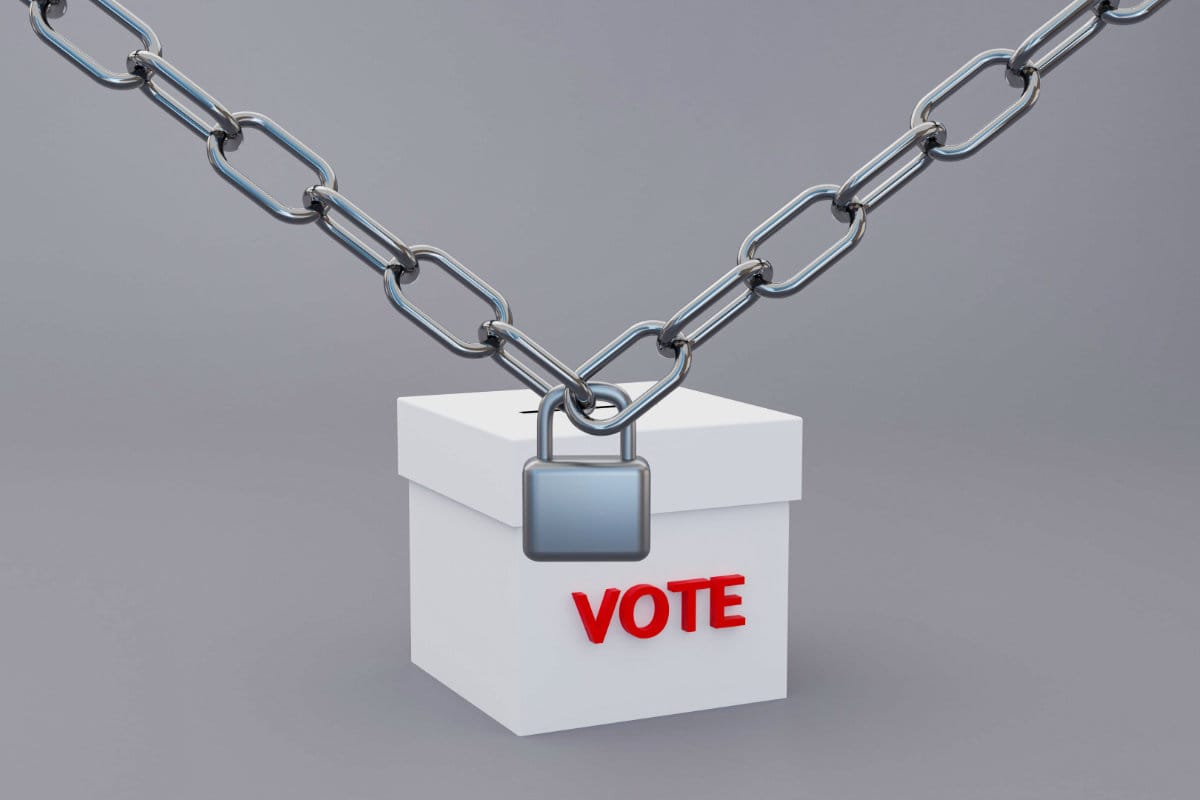
As the end of the year approaches, many South Carolina homeowners associations (HOAs) are planning their annual meetings and director elections. One issue frequently raised by these proceedings is whether HOA members who are not in “good standing” with the HOA, whether it be for delinquency in the payment of assessments or rule violations, are still entitled to vote on HOA business. Many HOAs might assume it is only reasonable that voting would be limited to members who are upholding the responsibilities of their membership. However, many HOAs may be surprised to learn that a member of a South Carolina HOA is entitled to vote regardless of whether they are in “good standing,” unless the HOA’s governing documents specifically provide otherwise. This article is a brief overview of applicable South Carolina law on this matter as well as some introductory guidance as to what an HOA might do to limit voting to only those members who are in “good standing” as the HOA may choose to define it.
As frequent readers of our articles will recognize, the overwhelming majority of HOAs in South Carolina are nonprofit corporations.
Accordingly, this article applies to those South Carolina HOAs that are nonprofit corporations and therefore subject to South Carolina’s Nonprofit Corporation Act (the “Act” and its provisions regarding voting rights and membership.[1]
Pursuant to the Act, unless the articles or bylaws provide otherwise, each member is entitled to one vote on each matter voted on by the members.[2] Therefore, if an HOA’s governing documents do not set forth a specific prerequisite for the right to vote, such as timely payment of their assessments or compliance with the governing documents, the HOA member is entitled to vote regardless of such infractions. That being said, many HOAs’ governing documents do set forth such requirements. It is not uncommon for HOA bylaws to prohibit voting by members who are delinquent in their assessments or whose voting rights have been suspended for some violation of the governing documents. However, even for HOAs that do have such provisions in their governing documents, it is important that they are familiar with the specific language of their provisions so they do not prohibit members from voting who technically would not be barred by the specific language of the provisions.
If an HOA’s governing documents do not contain a “good standing” or similar provision, that HOA might pursue an amendment to their governing documents to add voting requirements.
Of course, the HOA would have to comply with any applicable amendment provisions of their governing documents. Moreover, it would be prudent for the HOA to consult with legal counsel to ensure the provisions are properly incorporated into their existing governing documents and carefully drafted to be enforceable and unambiguous. For one example, a provision simply stating that a member must be in “good standing” to vote, without any definition as to what constitutes “good standing,” would not be ideal.
Voting is obviously a significant feature of HOA membership, and to avoid potential liability and legal challenge, HOAs must be careful not to prohibit members from voting unless as specifically set forth in their appropriate governing documents. However, carefully drafted and implemented “good standing” requirements can be an equitable way to encourage the timely payment of assessments and fulfillment of the other obligations of HOA membership.
This article is not intended to be an exhaustive discussion of applicable law regarding HOA voting rights nor any guarantee of the outcome of any litigation regarding the same. Our attorneys at McCabe, Trotter & Beverly, P.C. are experienced and well-equipped to answer questions you may have regarding this topic. Please contact us at 803–724–5000 for further information.
Christian Saville
McCabe, Trotter & Beverly, P.C. blogs and other content are for educational and informational purposes only. This is not legal advice and does not create an attorney/client relationship between McCabe, Trotter & Beverly, P.C. and readers. Readers should consult an attorney to understand how this information relates to their personal situation and circumstances. You should not use McCabe, Trotter & Beverly, P.C. blogs or content as a substitute for legal advice from a licensed attorney.
[1] S.C. Code Ann. § 33-31-101 et seq.
[2] S.C. Code Ann. § 33-31-721(a) (emphasis added).